Foto retro de reparación de arcade
Una fotografía granulada con flash de estilo finales de los noventa, de un joven arrodillado reparando un mueble arcade abierto en un salón en penumbra.
Los modelos económicos no renderizan tipografía de forma fiable; este caso necesita un nivel superior.
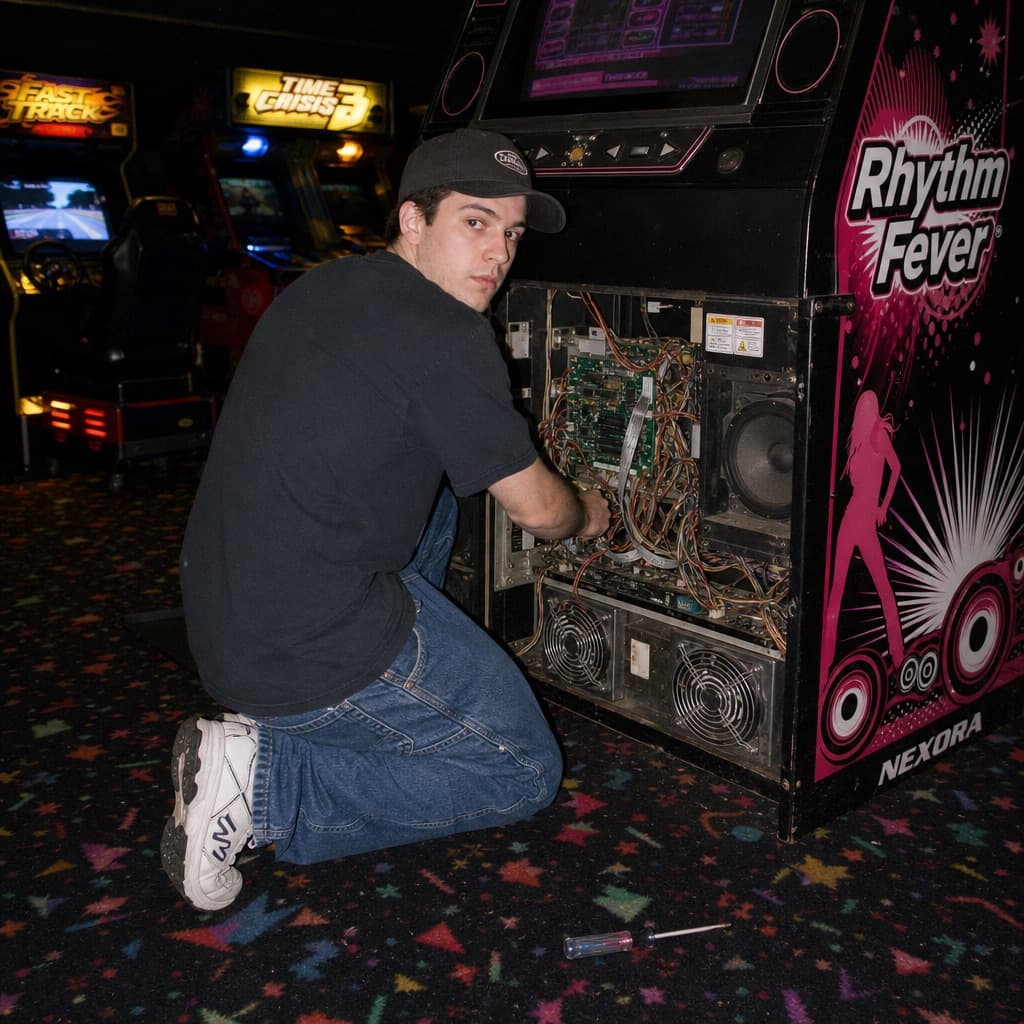
Imagen generada por nosotros con gpt-image-2. Prompt de @nicdunz
Prompt
A vintage, late-90s amateur flash photograph of a young man repairing an arcade machine. He is kneeling on a dark, patterned arcade carpet, looking back over his shoulder directly at the camera with a neutral expression. He wears a dark short-sleeved t-shirt, baggy blue jeans, chunky white sneakers, and a dark baseball cap. The lower front panel of the arcade cabinet is wide open, exposing its complex internal electronics, including a tangle of wires, green circuit boards, a large speaker, and metal cooling fans at the base. The side of the cabinet features vibrant pink, black, and white graphics with the text "[GAME_TITLE]" and the brand "[BRAND]". The setting is a dimly lit arcade interior with other glowing game cabinets visible in the blurred background. A screwdriver lies on the carpet near the man's knee. The image features harsh direct flash lighting, a slightly grainy film texture, deep shadows, and a nostalgic Y2K aesthetic.
Quedan 2 huecos sin rellenar. Si copias así, el generador dibujará los corchetes tal cual dentro de la imagen.
Variables editables
Cambia cualquier valor y el prompt se reescribe arriba. Copia el resultado ya listo.
El nombre del videojuego de arcade que aparece en el gráfico lateral del mueble.
El nombre de marca ficticia impreso en el mueble del arcade.
Genera la imagen aquí
Con tu propia clave de OpenAI. Gratis para nosotros, lo que gastes es tuyo.
Se guarda solo en este navegador y va directa a la API de OpenAI: no pasa por ningún servidor nuestro, porque no hay ninguno en medio. Puedes comprobarlo en la pestaña de red del inspector.
Rellena las variables que quedan antes de generar: si no, el modelo dibujará los corchetes.